How to Choose High-End Lingerie That Lasts
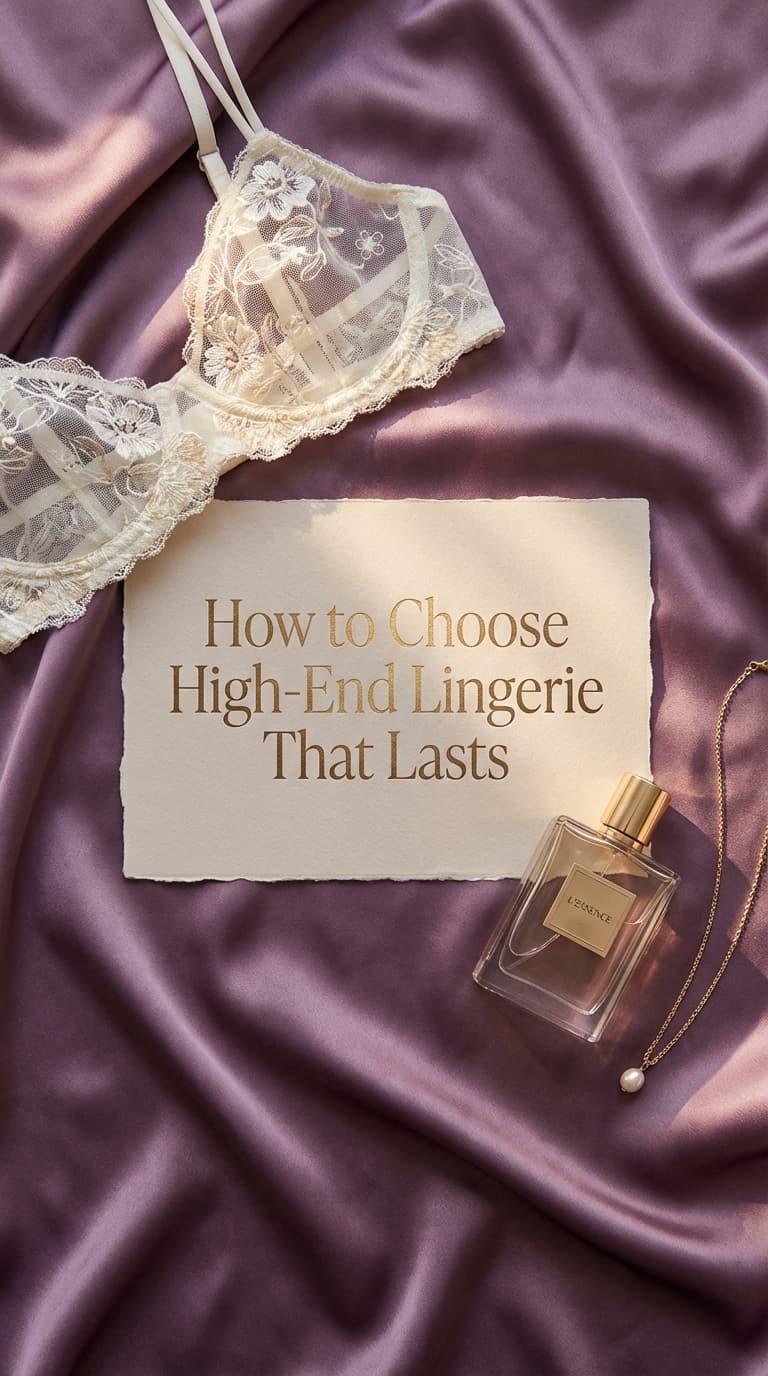
Every woman has a graveyard drawer. It is the place where bras go to die—wires poking through fabric, elastic stretched beyond recovery, lace torn and pilling after a handful of washes. We accept this as normal because we have been conditioned to treat lingerie as disposable. Buy it, wear it, toss it, repeat.
But what if the problem is not lingerie itself, but the lingerie you are choosing? Understanding how to choose luxury lingerie that genuinely endures transforms your relationship with intimate apparel. Instead of cycling through cheap bras every six months, you build a wardrobe of investment pieces that look better, feel better, and last years.
This is your definitive premium lingerie buying guide—a masterclass in spotting quality, understanding fabrics, and caring for your pieces so they reward your investment.
Part 1: The Fabric Decoder
The single most important factor in designer lingerie durability is fabric. Everything else—construction, fit, brand prestige—is secondary to the raw materials. Here is what to look for.
The Fabric Hierarchy
| Fabric | Durability | Feel | Care Level | Best For |
|---|---|---|---|---|
| Mulberry Silk | ★★★☆☆ | Heavenly | High (hand wash) | Slips, chemises, robes |
| Leavers Lace | ★★★★★ | Soft, textured | Medium | Bras, bodies, briefs |
| Micro-Modal | ★★★★★ | Ultra-soft | Low (machine wash) | Everyday basics |
| Supima Cotton | ★★★★☆ | Crisp, breathable | Low | Everyday briefs |
| Power Mesh | ★★★★☆ | Smooth, supportive | Medium | Bra wings, shaping |
| Polyester Satin | ★★☆☆☆ | Slippery, synthetic | Low | Avoid if possible |
| Cheap Lace | ★☆☆☆☆ | Rough, scratchy | Irrelevant (it won't last) | Nothing |
The "Hand" Test
Before buying, touch the fabric. If shopping online, check the composition label in the product details.
- Good Sign: The fabric feels soft and has body (it springs back when stretched).
- Bad Sign: The fabric feels stiff or "crunchy"—this means it has been chemically treated to look better on the shelf. After three washes, that coating dissolves, and you are left with a limp, shapeless rag.
The Composition Label
Always check the percentage breakdown:
- "90% Silk, 10% Elastane" = Excellent. The silk provides luxury; the elastane provides stretch and recovery.
- "100% Polyester" = Red flag, even at a high price. Polyester does not breathe, does not age well, and will pill.
- "65% Nylon, 35% Elastane" = Acceptable for shaping pieces and power mesh panels, but should not be the primary fabric.
Part 2: Construction Details That Matter
Fabric gets you 50% of the way to a long lasting lingerie piece. The other 50% is how it is assembled.
1. Stitch Count
Turn the bra inside out. Count the stitches per inch along a seam.
- Cheap bra: 5-7 stitches per inch. The thread is thick, the gaps are visible, and the seam is the first thing to fail under tension.
- Premium bra: 12-20 stitches per inch. The thread is fine, the stitches are tight, and the seam can endure years of stretching and washing.
2. French Seams
A "French seam" encloses the raw edge of the fabric within the seam itself, creating a smooth interior finish. This prevents fraying—the number one cause of premature lingerie death. Brands like Fleur of England and Simone Pérèle use French seams throughout their construction.
3. Wire Quality
Not all underwires are created equal.
- Cheap wire: A flat, U-shaped piece of steel that presses into the ribcage. It is one-size-fits-all and will eventually poke through the channeling.
- Quality wire: A 3D-shaped wire that follows the natural curve of the breast root. It flares at the underarm for comfort and is encased in a reinforced fabric channel with a stopper at each end to prevent migration.
4. Elastic Quality
Elastic is the Achilles heel of lingerie. It is the first component to degrade.
- Signs of Good Elastic: It stretches to 150% of its resting length and snaps back instantly. It feels smooth, not rubbery.
- Signs of Bad Elastic: It stretches and stays stretched. After a few washes, it becomes "crinkly" and loses its grip.
- The Test: Stretch the band of the bra as far as it will go, then release. Quality elastic recovers immediately. Cheap elastic takes a second to contract—and each time it does, it recovers a little less.
5. Lace Placement Symmetry
On a quality bra, the lace motif will be symmetrically placed across both cups. This requires the manufacturer to hand-cut the lace, aligning the pattern before stitching. Mass-market bras use die-cut lace panels where the pattern falls wherever it happens to land—resulting in cups that look slightly different from each other.
Part 3: The Brands That Last
Based on designer lingerie durability testing and customer longevity reports, here are the brands known for lasting:
Tier 1: Built to Last a Decade
- Simone Pérèle: French engineering at its finest. Their bras are famous for maintaining shape and elasticity for 3-5 years with proper care.
- Hanro: Swiss precision. Their Micro-Modal and Cotton Seamless lines are legendary for longevity. Some customers report wearing Hanro pieces for 7-10 years.
- Oscalito: Italian heritage. Their Filoscozia cotton pieces are virtually indestructible.
Tier 2: Built to Last 3-5 Years
- Chantelle: French engineering with high stitch counts and quality elastic.
- Empreinte: Specialist in full-bust bras. Their construction is overbuilt in the best possible way.
- PrimaDonna: Belgian luxury with comfort straps and three-part cups that maintain their shape.
Tier 3: Beautiful but Delicate (1-3 Years)
- La Perla: Exquisite, but the delicate silks and handmade lace require careful handling.
- Agent Provocateur: Fashion-forward, but some styles prioritize aesthetics over durability.
- Carine Gilson: Haute couture quality, but silk is inherently fragile.
Part 4: The Care Guide
Even the finest luxury lingerie fabrics will degrade quickly without proper care. Here is the definitive guide.
1. Hand Wash (Always)
The washing machine is the number one killer of luxury lingerie.
- Fill a basin with lukewarm water (never hot).
- Add a gentle detergent (Soak Wash, The Laundress, or baby shampoo).
- Submerge the piece for 15-20 minutes. Gently agitate—do not wring or twist.
- Rinse in cool water until the water runs clear.
2. If You Must Machine Wash
- Use a mesh lingerie bag (one bra per bag).
- Select the delicate/hand wash cycle with cold water.
- Use liquid detergent (powder can lodge in lace and degrade fibers).
- Never use fabric softener. It coats elastic fibers and accelerates breakdown.
3. Drying
- Never tumble dry. Heat destroys elastic and warps underwires.
- Lay flat on a towel and reshape the cups by hand. Alternatively, hang by the center gore (never by the straps).
- Avoid direct sunlight, which can fade colors and weaken silk.
4. Storage
- Stack bras cup-in-cup in a drawer, never fold one cup into the other.
- Rotate your bras. Never wear the same bra two days in a row. Elastic needs 24-48 hours to recover its tension.
- Store silk pieces in breathable cotton bags, not plastic.
Part 5: The Investment Strategy
Knowing how to choose luxury lingerie is also about spending wisely. Here is a strategic approach to building a lasting wardrobe.
The "3-2-1" System
- 3 Everyday Bras: Invest in three premium T-shirt bras in neutral tones (nude, black, ivory). Rotate daily. Budget: $150-$250 each from Simone Pérèle or Chantelle.
- 2 "Feel Good" Sets: Two matching lace sets in your favorite colors—for days when you want a confidence boost. Budget: $200-$400 per set from Aubade or Fleur du Mal.
- 1 "Special" Piece: One showstopper—a silk bodysuit, an embroidered corset, or a hand-finished chemise. This is the piece you save for meaningful occasions. Budget: $400-$800 from La Perla or Carine Gilson.
Total Annual Budget: $1,050 - $2,350
This sounds significant, but consider: if each piece lasts 3-5 years, your cost-per-wear drops to pennies. Compare that to buying cheap bras every six months.
FAQ: Choosing Quality Lingerie
Q: How can I tell if lace is high quality? A: Hold it up to the light. Quality lace (Leavers, Guipure) has depth—multiple layers of thread creating a 3D effect. Cheap lace is flat and uniform, like a printed pattern on fabric. Also, stretch it gently. Quality lace recovers its shape; cheap lace distorts permanently.
Q: Is underwire bad for you? A: No. The myth that underwire causes health problems has been thoroughly debunked. A well-fitted underwire bra provides superior support. The issue is poorly fitted underwires—wires that sit on breast tissue instead of the inframammary fold.
Q: How often should I replace my bras? A: With proper care, a quality bra should last 2-5 years (depending on frequency of wear). Replace when the band no longer provides support on the tightest hook, when the cups are permanently misshapen, or when the wires poke through.
Q: Does expensive always mean better? A: Not always. A $300 bra with a designer logo on basic cotton is not inherently better than a $100 bra with French seams and Calais lace. Always check the composition label and construction details, not just the price tag.
Conclusion
Choosing luxury lingerie fabrics and construction that endures is not about spending more—it is about spending with knowledge. Once you understand the difference between Leavers lace and polyester lace, between 7 stitches per inch and 17, between elastic that recovers and elastic that gives up, you will never waste money on disposable lingerie again.
Build your wardrobe with intention. Care for your pieces with respect. And remember: the most sustainable bra is the one you do not have to replace.